Hiking in Åsnen national park
Åsnen National Park offers several marked hiking trails. All trails are clearly signposted, with trail markings designed to be accessible for people with colour vision deficiency.
The national park has a different character in its various areas. In the northern part, broadleaf forests take centre stage, while Toftåsa Mire in the south has a more distinctly northern feel. Accessible trails can be found at Sunnabron, Bjurkärr and Trollberget.
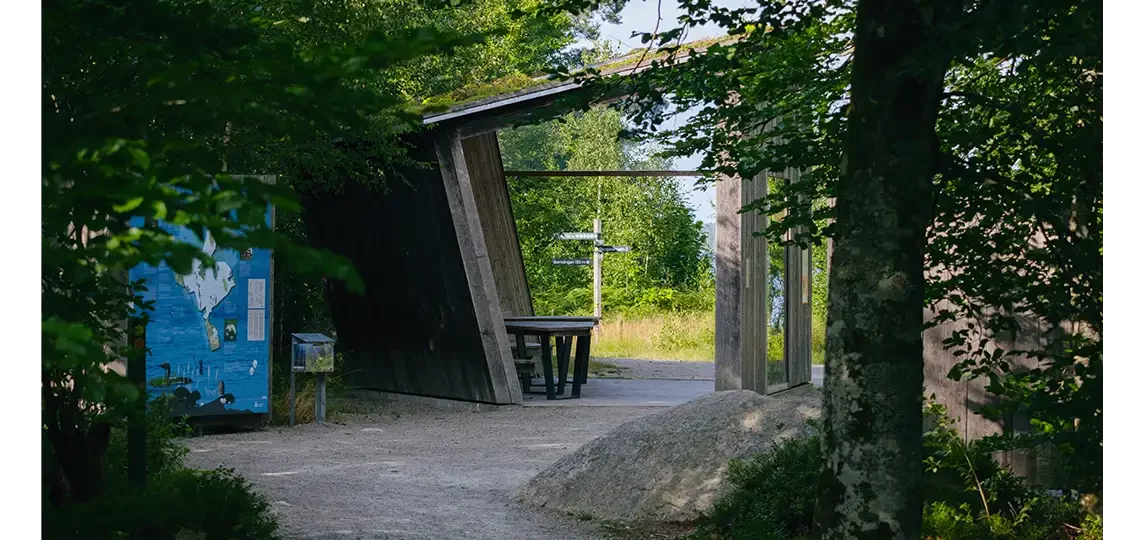
Entrance Sunnabron
There are several trails of varying lengths, which can also be combined for a longer hike. Trail maps are available on information boards and in brochures in the national park. The 0,9 kilometer trail Västra Torpaslingan connects Sunnabron with Bjurkärr, where you can continue on either the 1.7 kilometer Bokslingan Trail or the slightly rockier 2.6 kilometer Strandslingan Trail.
The 300-metre trail Östra Torpaslingan leads to Torpet Sundet and the jetty facing the Kalvsholmarna islands to the east. This jetty is a popular spot for birdwatchers. Park at Sunnabron and walk along the shoreline, enjoying wonderful views across Lake Åsnen while surrounded by beautiful broadleaf forest.
If you start at Sunnabron and follow the trail Västra Torpaslingan to Bjurkärr, then continue along the Bokslingan Trail, you will have an accessible walk of approximately 3,5 kilometer. It is also a pleasant option for groups, as the trail is wide enough to walk side by side rather than in single file.
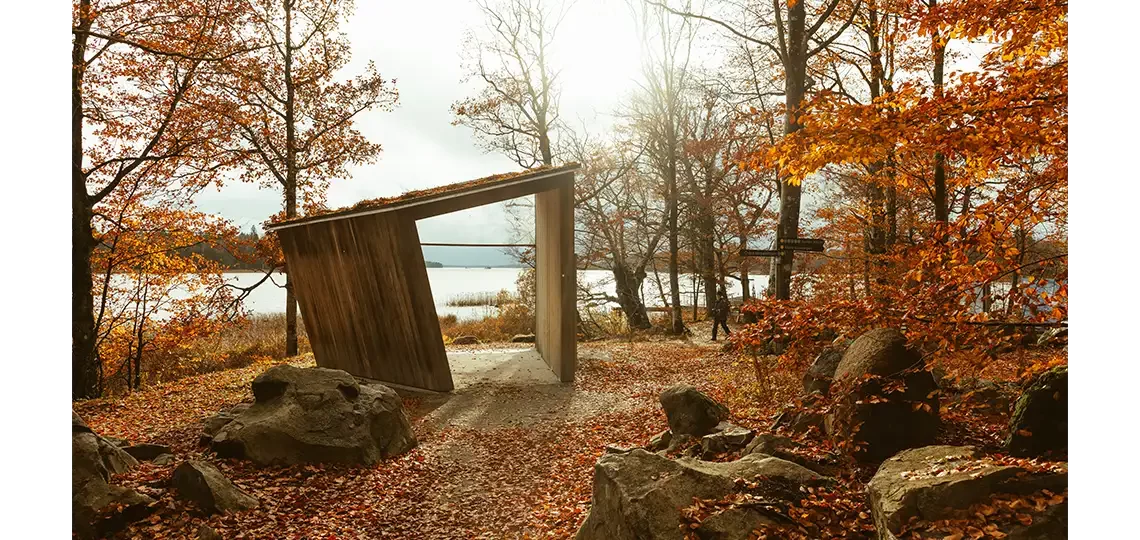

Entrance Bjurkärr
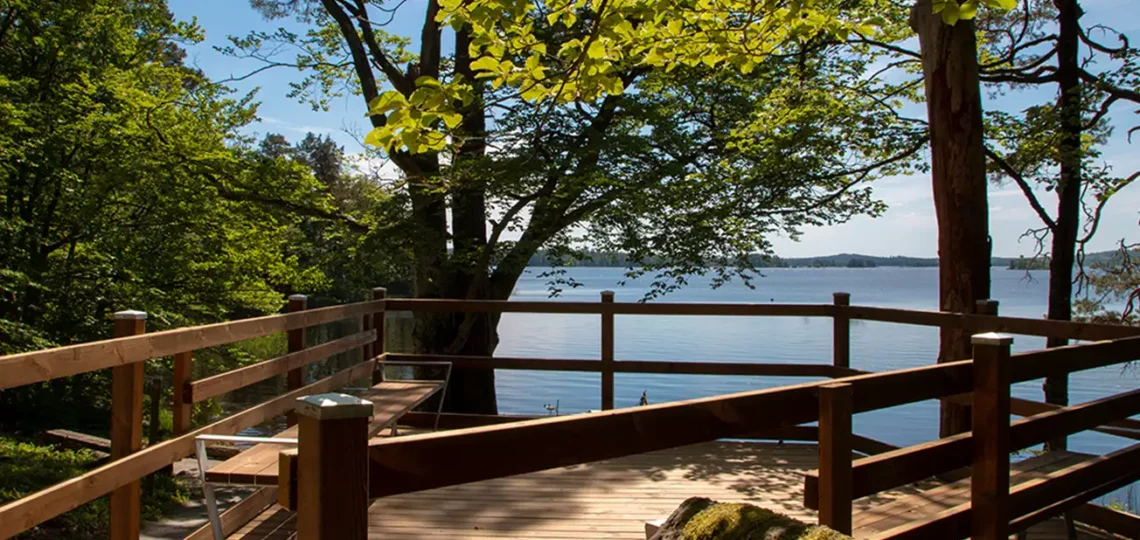
In Bjurkärr, you can then take the 1.7 kilometer trail Bokslingan loop or the slightly stonier Strandslingan loop of 2.6 kilometer. These trails will take you directly into the heart of the old beech forest, which is rich in flora and fauna. Bokslingan trail is marked in yellow and adapted for wheelchairs and prams. At Bjurkärr car park there’s a nice rest area in a glade with wind shelter and barbeques. Along the trail is a place known as Famntaget (the embrace) where a beech tree embraces a pine, and there’s a wooden deck looking out over the water.
Strandslingan trail is the most complete round of the peninsula’s deciduous forests, but it’s uneven and narrow in places. The path partly runs along the edge of Bjurkärr’s outermost point, which is a bird conservation area. Access to the area is not permitted 1 April–31 July, and during this time you’ll need to take an alternative route around the area.
Tip: If you are looking for a longer hike, we recommend “Hiking through Åsnen’s leafy forests”, a 9 kilometer route. It starts in Bjurkärr, continues south to Sunnabron and then takes you through Hunshult Nature Reserve.

Entrance Trollberget
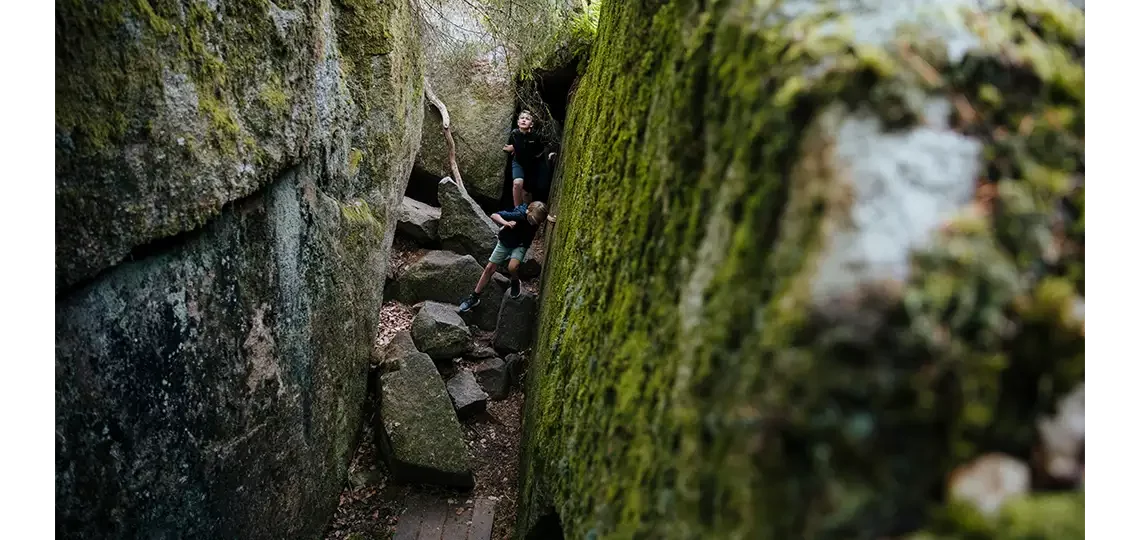
Trollberget offers a shorter accessible trail, Trollsvansen, as well as the slightly longer Skogsslingan and Lodjursstigen trails.
Trollsvansen, 300 metres long, leads from the car park to the entrance area, where you will find a shelter, tables, barbecue areas and a jetty. The trail circles the legendary Trollberget, with its cave, and is accessible for wheelchairs and pushchairs, although some sections have a slight incline. (Trollberget is not a mountain in the usual sense, but rather exposed bedrock rising above the surrounding ground.)
Skogsslingan, 2.2 kilometer long, takes you through several different types of forest. The trail is narrow and sometimes rocky, with sections of boardwalk across peatland. Along the route, you will also pass a small headland with a little beach where you can go for a swim. Before returning to the starting point, you can take a break on the lakeside wooden deck near the entrance area.
Toftåsa marsh
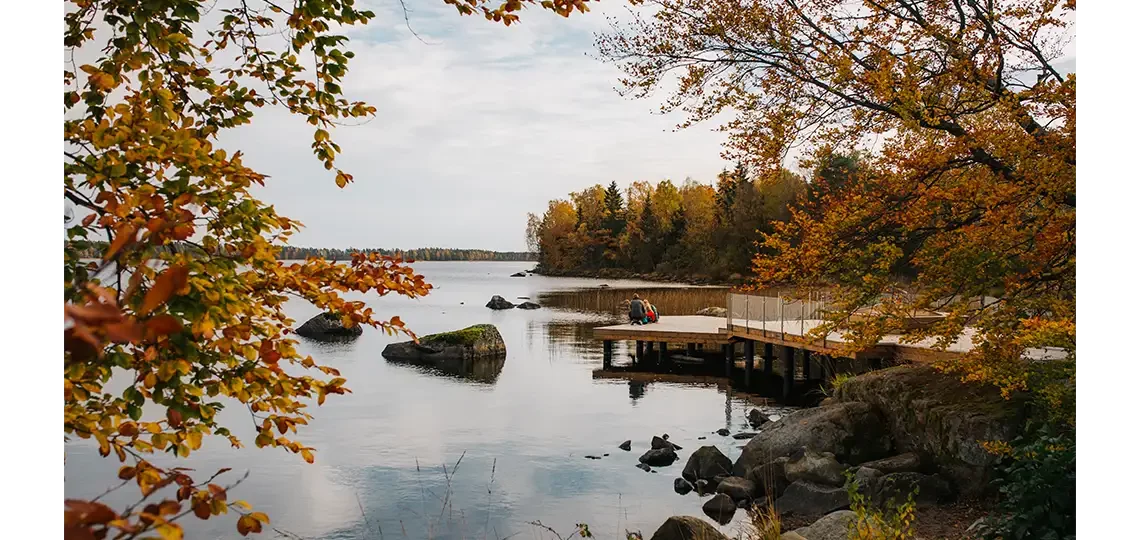
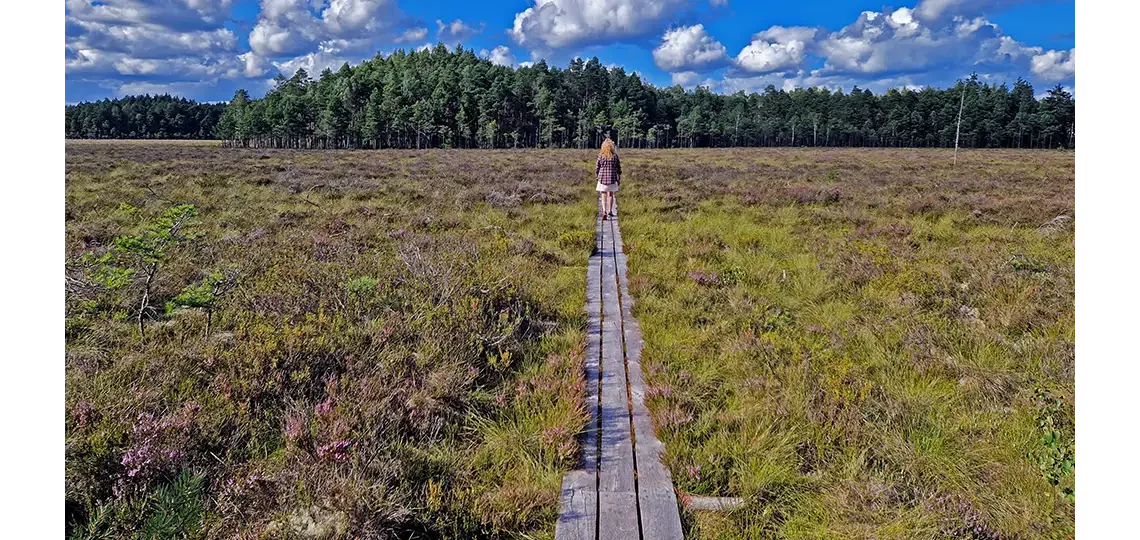
Toftåsa marsh is the southernmost part of the national park, and the nature here differs significantly from Sunnabron and Trollberget. Marshland and pine forests give it a more northerly feel!
Södra slingan trail is 1.4 kilometer, and you can start it from the car park next to Lake Svartsjön. When you join the cycleway Banvallsleden, follow it for a short distance north and you’ll reach the 1.6 kilometer Norra slingan trail. Both paths are marked and have occasional footbridges. Waterproof shoes are recommended if there’s been heavy rain.
Here you can find a description of the full circular trail, which is approximately 3.6 km long.

Bergön island
Bergön island can only be reached by boat or kayak and is one of the largest islands within the national park.
You can go ashore on the southern side of the island by a small jetty from which you’ll soon see the old homestead, which was inhabited until the mid-19th century.
There’s a narrow 1.6 kilometer path that leads out into a mixed primeval forest on slightly hilly terrain. The northern part of the island comprises a bird conservation area, access to which is not permitted 1 April–31 July.

Read more about Åsnen National Park
Here you’ll find all the information you need before your visit to Sweden’s thirtieth national park! Click on the link below for tips on paddling, cycling and where you can stay the night.